All Categories
Featured
Table of Contents
Scale your material method with programmatic SEO. Template-based page generation, vibrant material, database-driven pages, and quality control techniques. 1000sPages Generated Per Data Set40%Traffic Increase from Topic Clusters6 monthsTypical Time to Ranking Results300+Minimum Words Per Programmatic Page Programmatic SEO matches websites with structured, repeatable data at scale: Place pages, item comparisons, income data, and evaluation aggregations are perfect prospects.
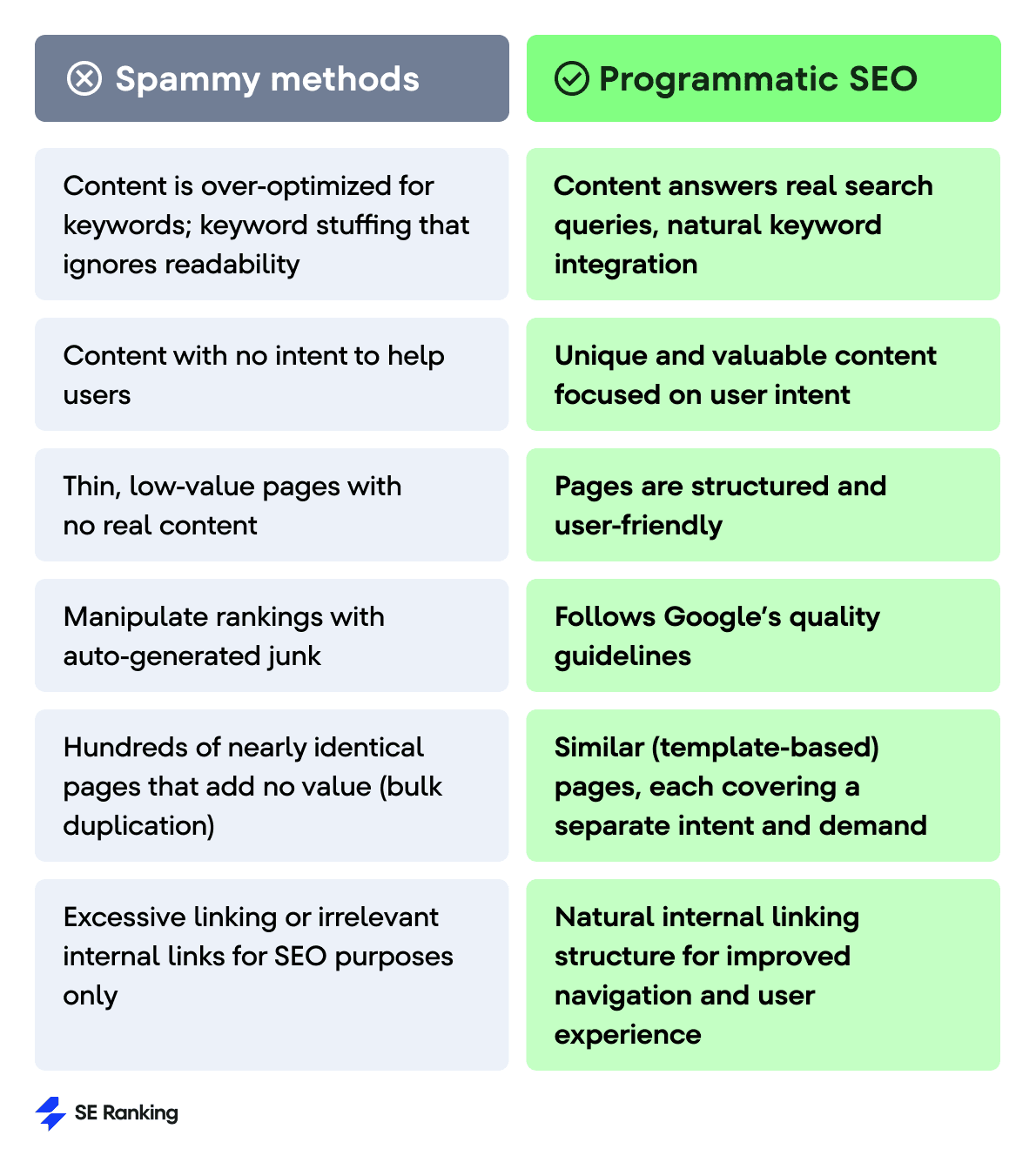
Template quality determines whether pages rank or get filtered as spam: Each design template must provide unique, proven data on every page, significant page-specific content beyond the data, and proper semantic HTML structure. Copy-paste boilerplate pages with only data switched will not rank. A structured data source is the foundation of every effective programmatic program: Whether sourced from a proprietary database, third-party API, scraped publicly available data, or user-generated material, the information should be accurate, frequently upgraded, and adequately distinguished throughout pages.
Indexation management is the primary ongoing difficulty: Google does not index all submitted pages. Economical crawl budget management, XML sitemap segmentation, and internal link depth control determine which pages get indexed and ranked. Zapier ranks for over 40,000 keywords utilizing a single template:" [App A] + [App B] combination." Tripadvisor controls travel search with location-specific evaluation aggregation pages produced from user information.
Advanced Workflows for Mass Page Generation Tools
These companies did not write countless private posts they constructed design templates that produce unique, valuable pages at scale. Programmatic SEO is the discipline of producing great deals of landing pages targeting particular, repeatable keyword patterns using structured data and templated page architecture. Done properly, it records long-tail search need at a fraction of the cost of private material development.
Programmatic SEO automates the creation of pages that separately target particular long-tail keyword combinations. Rather than by hand writing a page for "accountant near Denver" and another for "accounting professional near Austin," a programmatic approach creates both pages (and thousands more) from a single template powered by city and occupation information.
Programmatic pages should supply information, details, or utility that is really specific to that page variation regional organization listings, real pricing data, genuine user reviews, verified data. Pages that only swap a city name into otherwise identical boilerplate will not rank and may trigger thin content penalties. Location-specific service pages with real local dataSoftware combination pages (App A + App B)Salary comparison pages with genuine settlement dataProduct comparison pages with structured specsFAQ pages powered by real user question databasesTravel location pages with actual visitor dataTutorial material requiring original expertiseOpinion or analysis pieces requiring human judgmentLow-data variations (no distinct data per page)Hyper-competitive keywords without data advantageBrand story and trust-building contentCommunity and UGC content needing user participationThe decision to pursue programmatic SEO hinges on one question: do you have structured information that varies meaningfully throughout the keyword variations you want to target? If yes, and the information provides real worth to users looking for those specific variations, programmatic SEO can scale your natural reach drastically.

The template style figures out both user experience quality and SEO efficiency. Improperly developed design templates produce pages with similar structure and very little variation exactly what Google removes as duplicate content. Template ElementFixed or VariableOptimization TipPage title/ H1Variable (keyword-specific)Include primary keyword naturallyMeta descriptionVariable (data-driven)Include special data points per pageCore information displayVariable (primary unique value)The factor users visit make it prominentContextual textMixed (partial variable)Insert data worths into design template sentencesRelated pages linksVariable (dynamic)Link to most relevant comparable pagesCTA/ conversion elementFixedPersonalize CTA copy with variable dataThe gold requirement for design template quality: a user landing on any page ought to immediately receive special, important info they could not find on another page in your inventory.
The Role of Structured Data in Programmatic ScalingAutomated Blog Systems and Mass Content Output
Add information points particular to each variation: median pricing in that city, leading service providers in that market, local guidelines, or user reviews from that place. The quality of your programmatic SEO program is bounded by the quality of your information source. A rich, accurate, regularly updated dataset powers pages that rank and please users.
The Role of Structured Data in Programmatic ScalingExamples: Airbnb pricing information, Glassdoor income information, Zillow listing data. Public datasets, federal government data, industry APIs (Bureau of Labor Data for salary information, Census Bureau for demographics, Google Maps API for regional data).
User-generated content reviews, scores, Q&A creates continually upgraded special content per page. Programmatic pages with stale data (prices dated by 6+ months, listings that no longer exist, stats from 3 years ago) erode user trust and make negative engagement signals.

Latest Posts
Designing Modern Programmatic SEO Frameworks for Bulk Content
Manual Versus AI SEO for E-Commerce
Designing Resilient Bulk Page Generation Systems