All Categories
Featured
Table of Contents
Carry out a noindex technique for data-sparse pages. If your dataset has spaces cities with less than 10 companies noted, products with no reviews, combination pages for deprecated apps noindex those pages rather than indexing thin content.
Without purposeful internal connecting, many programmatic pages become orphaned technically live however never ever crawled or indexed since no pages link to them. Style a hub-and-spoke architecture: classification or index pages (hubs) connect to specific programmatic pages (spokes), which connect back to the center and to associated spokes. A city landing page links to all service-specific pages in that city.
This develops a dense internal link graph that distributes authority and simplifies crawling. For big programs (10,000+ pages), generate internal links dynamically. Hardcoding links at this scale is not practical. Utilize your data to produce contextually appropriate link recommendations: "Other cities in [State], "Similar combinations", "Related classifications." Limitation to 10-20 internal links per page to preserve link equity concentration.
The Increase of Highly Structured Automated Data
Automated Blog Generators for Mass SEO Output
Google does not index every page it finds, and for programmatic programs with countless pages, indexation management is the primary ongoing challenge. Sites with minimal crawl spending plan may find that only 10-30% of their programmatic inventory gets indexed. Strategic crawl budget plan management optimizes the percentage of high-quality pages that get indexed and ranked.
Focus on sitemaps containing your highest-quality, highest-potential pages. Decrease crawl budget plan consumption on non-programmatic content (block administrative URLs, search result pages, and faceted navigation in ), boost internal links to high-priority programmatic pages, use 301 redirects to retire deprecated pages easily, and guarantee server response times are under 200ms for programmatic pages to maximize crawl rate.
The "Crawled currently not indexed" and "Found currently not indexed" status classifications reveal pages that Googlebot has actually seen but selected not to index usually a quality or crawl spending plan signal. Examine pages in these categories and either improve their quality or noindex them to reroute crawl budget towards higher-quality pages.
Best Practices for Mass Content Creation Tools
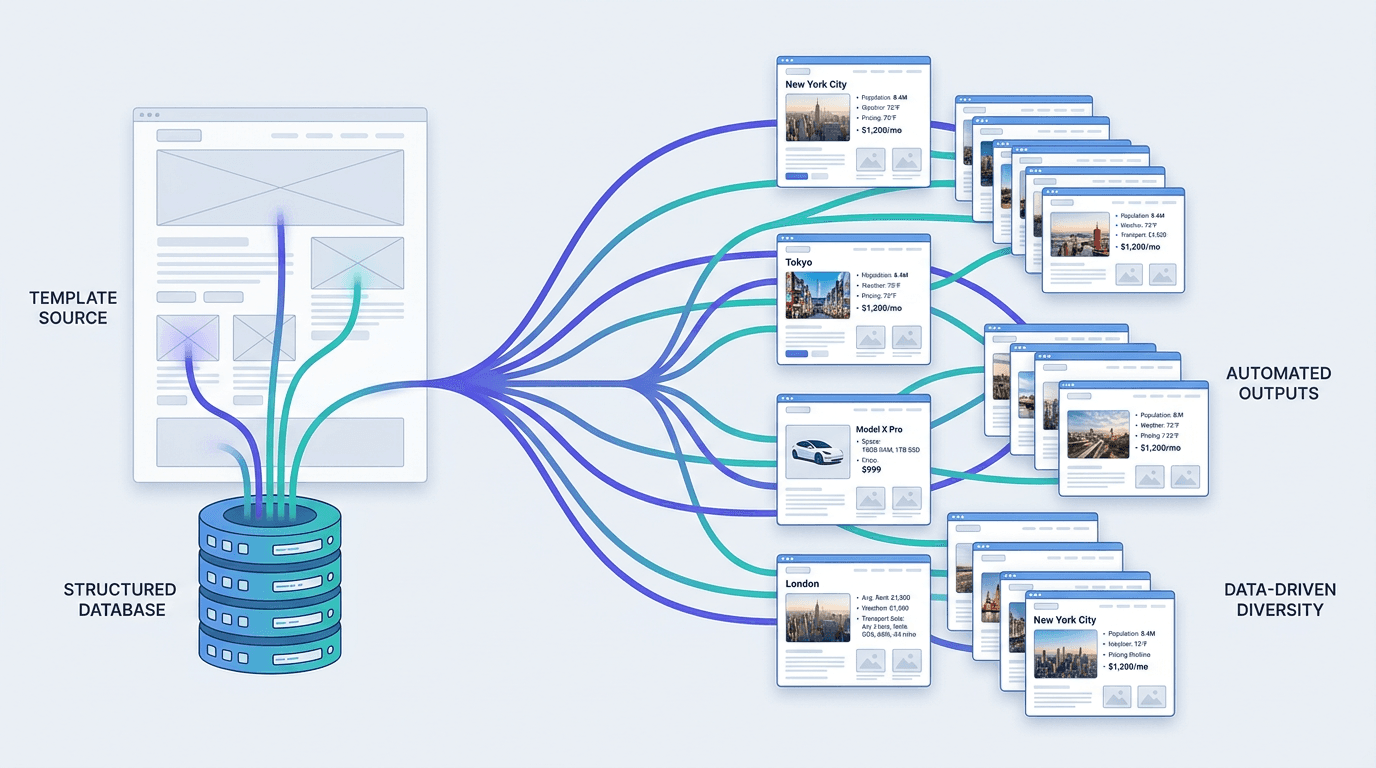
3 illustrative methods demonstrate what is possible at various scales. SaaS tools create pages for every single app combination (App A + App B). Zapier has 40,000+ such pages. Each page documents the particular combination steps, offered triggers and actions, and popular use cases genuinely unique information per combination. Local service directories create pages for every service-city combination: "plumbers in Chicago," "heating and cooling professionals in Denver." Quality depends on having real company listings with evaluations not simply a city name in a boilerplate template.
Tool B). Each page pulls structured function information, prices, scores, and user evaluations from a central database, developing special, detailed contrasts at scale. The typical thread throughout all successful programmatic SEO programs: the information itself provides the user worth, and the template contextualizes and provides that information plainly. For eCommerce-specific programmatic SEO applications, see our eCommerce SEO product and category page guide.
Programmatic SEO makes it possible for natural traffic growth that would take years of manual content production. Our group develops the information foundation, design template style, and indexation management to turn programmatic pages into a compounding traffic possession. Deepen your SEO knowledge.
// Programmatic SEO: What it is and how to make it work for you SEO Professional at SE Ranking, Oleksii has extensive knowledge in technical and on-page SEO in addition to in material marketing and off-page optimization. Summarize this post with: Programmatic SEO is a smart technique for developing high-impact pages at scale.
Choosing Mass Content Creation Engines to Boost Growth
In this post, we'll break down what programmatic SEO is and how to utilize it the ideal method. Here's an easy guide to setting up programmatic SEO to get high-ranking automated pages that bring in traffic and offer real worth.
Evaluation search intent carefully: Determine user expectations for each keyword and customize your page structure accordingly. Collect precise, pertinent data: Usage trustworthy sources like internal databases, public datasets, APIs, or web scraping to power your material and maintain quality at scale.
Build strong page templates: Style SEO-friendly, dynamic design templates that adapt to each keyword while using unique, useful experiences to users and online search engine. Step 5. Release with leading tools: Automate publishing with platforms like WP All Import, Zapier, Softr, or Whalesync, however always test pages for broken links, format, and mobile responsiveness.

Latest Posts
Designing Modern Programmatic SEO Frameworks for Bulk Content
Manual Versus AI SEO for E-Commerce
Designing Resilient Bulk Page Generation Systems